I Am Antonio Guttttteeeerrrrres!

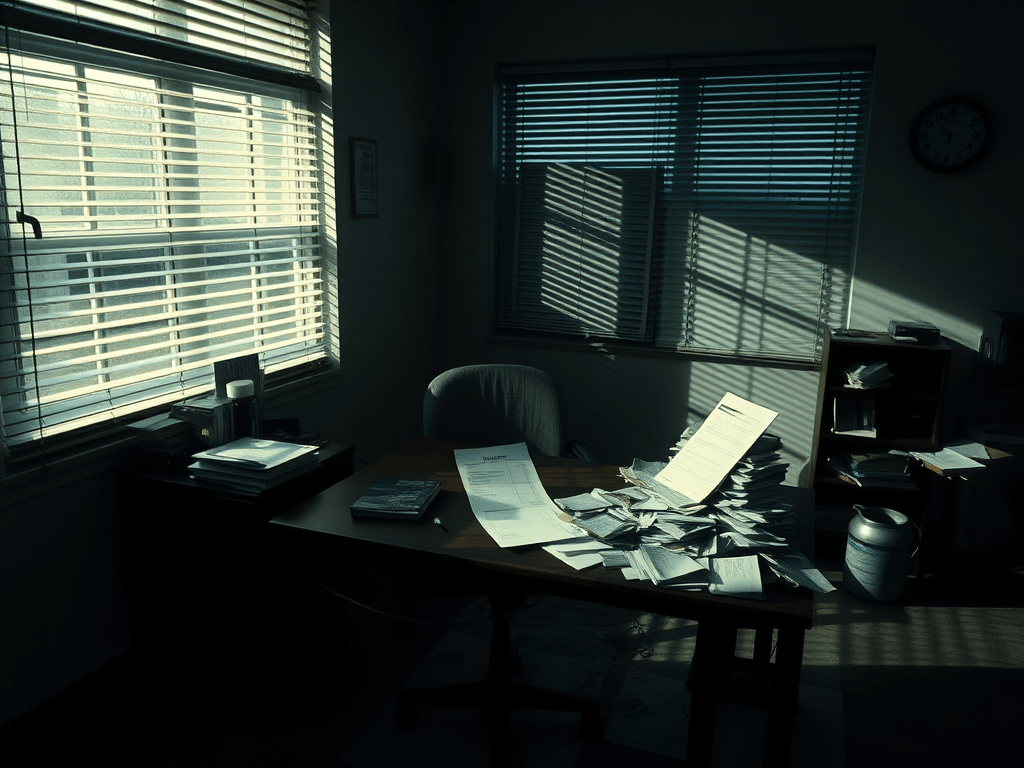
Antonio Guterres speaking angrily at UN podium about unpaid United Nations dues

I am the Secretary-General.
This time the collapse is financial.
Not moral —
those have been rolling since the flag was stitched.

We are owed money.
A record sum.
We like records.
Most meetings per outcome.
Most languages per problem solved.
Most observers per massacre.

In 1994
eight hundred thousand people were killed in Rwanda.
We were present.
Presence is important.
We watched carefully.
We took notes.
Then we left.
Leaving is called restraint
when you have name badges.

In 1995
we declared Srebrenica safe.
The word safe survived.
Eight thousand people did not.
We reviewed our processes.
The processes survived.

Our peacekeepers went to Haiti
to help.
Ten thousand people died of cholera.
From the help.
We apologised.
Apologies do not require logistics.

We are neutral.
That is why the strong and the weak
get one vote each.
The United States pays a fifth
and speaks once.
Tuvalu speaks once.
Population eleven thousand.
Equality is very tidy on paper.

China pays.
China votes.
China sits on the Human Rights Council.
So do Eritrea and Sudan.
We put “human rights” in the title
to keep them nearby.

We condemn things.
Strongly.
Sometimes strongly-er.
The things continue.
But now they are condemned.
This is progress you cannot see.

We investigated Oil-for-Food.
Found billions missing.
Named thousands.
Prosecuted none.
Published a report
long enough to stop a door.

We have rules.
The rules say unused money
must be returned
to states that did not pay.
This is sustainability
as understood by people
who quote Kafka
instead of fixing things.

Our peacekeepers have guidelines.
The guidelines say
do not abuse the people
you are meant to protect.
The abuse continues.
But now it is against the guidelines.
This is accountability.

We may run out of cash by July.
This will affect operations.
Operations such as
watching
and expressing concern.

Please send money.
We promise to give some of it back
to those who didn’t send any.
That is the system.
We designed it.

Changing it would require a resolution.
The resolution would be optional.
Optional means ignorable.

I am not good at arithmetic.
Or prevention.
Or stopping things.

I run the United Nations.

An Unpaid Invoice

He has my pension,
sitting somewhere it no longer remembers me.

He has my property,
brick and paper converted into silence.

He has my investments,
years folded neatly into his pocket,
creased beyond recognition.

He owes me the remnants of a vast loan—
vast when it was mine,
residual now it is his.

He owes me four years’ salary,
four winters of restraint,
four summers of “next quarter”.

He took my business,
and with it the simple dignity
of earning my own living.

He does not speak to me.
Silence has become his chief operating system.

I do not know what he is doing to our business—
I still call it ours
out of habit,
or grief.

He will not reveal the revenue,
despite the healthy turnover,
despite the noise it makes when mentioned to others.

He will not let me see the books.
They are balanced, he says,
like a glass placed just out of reach.

He refuses to meet his commitments,
but meets his reflections daily
without discomfort.

He loses focus each time he draws breath,
as if attention itself
is an intolerable cost.

He thinks I am scary.
He thinks I am angry.
His imagination does the heavy lifting now,
running ahead of facts,
inventing menace where questions live.

He accuses me of disrespect,
of lacking faith—
faith, he says,
without evidence.

But faith is not required
when the truth is present.
Faith is a substitute,
not a virtue.

Respect has room for secrets—
for privacy, for timing, for restraint—
but it has no shelter for lies.

And somewhere between the numbers
I am not allowed to see
and the answers I am not allowed to ask,
my life waits
like an unpaid invoice,
long overdue,
still polite enough
not to shout.

Song of the Gentle Leviathan

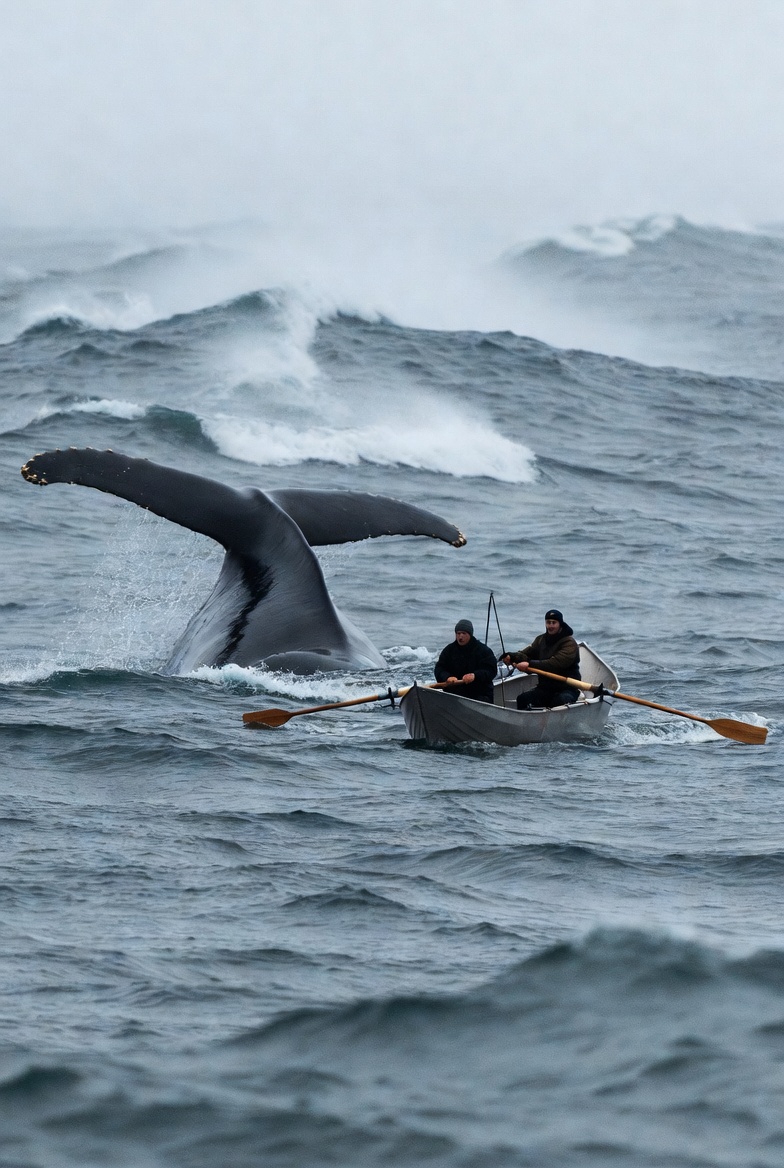
A small open whaleboat on a cold, rough sea, one man rowing and another bracing with a harpoon, facing the immense shape of a Right Whale rising from the grey water.

To be sung to the tune of several bottles of rum while drinking the Wellerman Song

There once was a time on a cold grey sea
When men went out in boats of three,
With oars of ash and a hemp-rope coil
And iron heads for blood and oil.

Oh haul away, lads, haul away down,
The Wellerman comes when the work is done,
When the tongue’n is cut and the flensing’s begun,
Oh hold fast, boys, and pray for sun.

They found her rising at break of day,
A mountain of breath in a skin of grey,
She sounded deep, then rolled once more,
And the sea went still where she lay before.

The first iron flew and the second too,
And the water bloomed a darker blue,
She thrashed and turned in her mortal pain
Till the sea was rope and the rope was strain.

Oh haul away, lads, haul away slow,
Greed is a wind that a man won’t know,
We sing of profit, we sing of gain,
But the sea keeps count of every stain.

The boat ran close in the killing press,
Too near the flukes, too deep the mess,
One blow would have sent them to the deep,
To the cold black hold where the drowned men sleep.

But the whale rolled clear though the iron burned,
She held her body, she checked her turn,
She lifted her tail, then eased it down,
So the fragile boat stayed righted and sound.

No hand of hers was raised in hate,
No thought of vengeance, no thirst for fate,
Though speared and dying, she chose restraint,
While men cried out for oil and weight.

Oh haul away, lads, haul away blind,
We name it courage, we name it kind,
But what is a man when the beast he slays
Shows more care in its final days?

They took her tongue when the breath went thin,
They stripped the blubber, the bone, the skin,
And the Wellerman came with sugar and rum
To pay the price when the work was done.

But the sea remembers what men forget,
The balance broken, the quiet debt,
And somewhere deep in the turning tide
Drifts the mercy that the whale supplied.

So sing this song when the night winds moan,
Of the care she showed we’ve never shown,
That even dying, harpooned and torn,
She kept men safe who never learned.

Oh haul away, lads, haul away true,
Let one tear fall in the salt-spray too,
For the whale that died so men could take,
Yet spared their lives for mercy’s sake.

The Thin Wall Between Lies

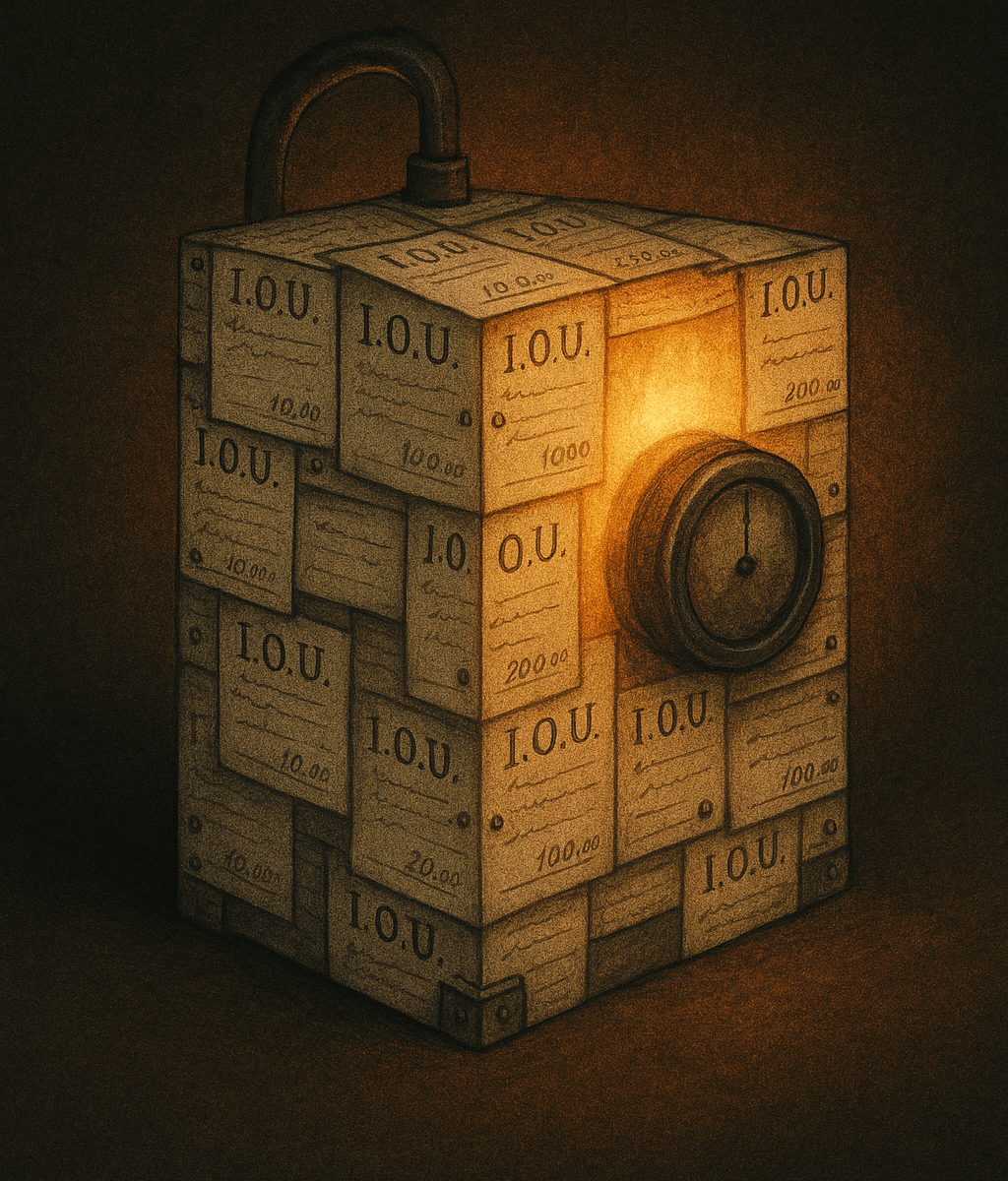
Surreal machine made of IOUs glowing warmly in a dark room

Peter keeps the ledger.
Neat columns. Dates aligned.
“Paid,” he writes, in pencil,
because ink would be a lie.

The money is always coming.
Next week. After clearance.
Once accounts reconcile
with a future that never arrives.

Paul waits on the other side
of the same thin wall.
Different excuse. Same echo.
Funds delayed. Circumstances. Process.

Peter was told Paul had the cash.
Paul was told Peter spent it.
Between them, a corridor of promises
swept nightly, never furnished.

They do not argue anymore.
There is nothing left to dispute.
Only the quiet competence
of being unpaid in turns.

Somewhere, the system hums—
healthy, audited, congratulated—
while Peter balances nothing,
and Paul remains, impeccably, broke.

How to Stop a Bull

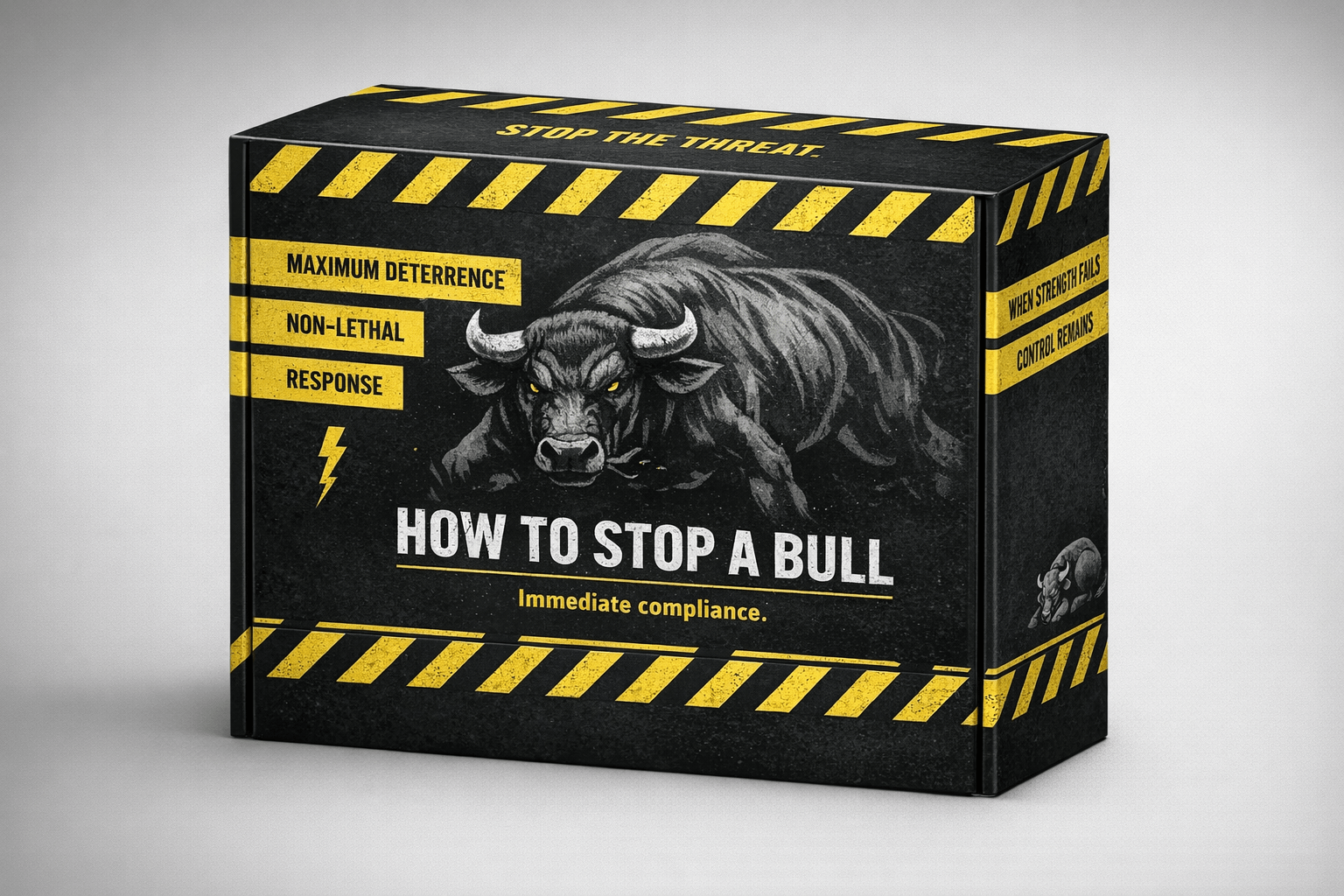
Black and yellow fictional retail box titled “How to Stop a Bull” featuring a charging bull and industrial warning graphics

With Grieg’s Solveig’s Song murmuring in the room like a memory that refused to settle, I regarded the object on my desk as one might regard a moral problem rather than a tool. Its yellow-and-black casing had the crude confidence of a warning sign, a thing that announced danger not by subtlety but by volume. It did not invite curiosity; it challenged it. The marketing bravado still echoed in my head — stop a bull — a phrase so casually obscene in its certainty that it reduced violence to a cartoon. Even the packaging had rehearsed the lie: rage on the outside, tranquillity within, as though brutality could be switched off by presentation alone.

Pickles moved beneath my chin, her tail brushing my face with deliberate intimacy. Cats have a way of interrupting abstraction with life. She was warm, alive, heedless of symbols. For a moment I wondered whether she sensed the wrongness of the thing in front of me, whether animals possess an instinct for objects whose sole purpose is domination. The thought that followed — uninvited and instantly abhorrent — stopped me cold. I dismissed it with shame. Curiosity has a habit of disguising itself as reason, but there are lines that announce themselves clearly once approached.

And yet the question remained, stripped of excuses: what does it do to a human being?

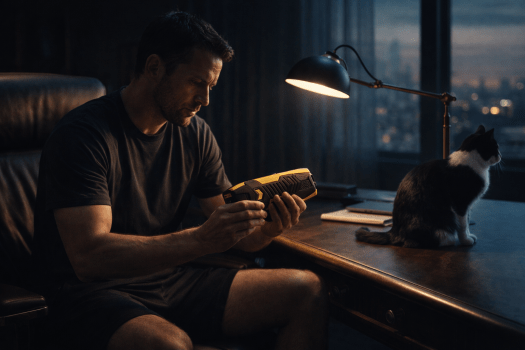
Man seated at an expensive desk holding a black and yellow device while a black and white cat sits beside him looking out of a window
A moment of hesitation: a man contemplates a device designed for control, while his cat, Pickles, looks outward, indifferent to the decision at hand.

Not in theory. Not in specifications or warnings. In the flesh. In consciousness.

Schrödinger intruded, as he so often does when one is tempted to confuse knowing with imagining. Until observed, the outcome remains mercifully abstract. Pain exists only as a concept until it does not. Pickles, in her indifferent wisdom, offered me two futures with equal plausibility and no commentary.

I sat there, absurd in my running shorts, contemplating how easily language softens reality. Non-lethal. Deterrent. Compliance. Words that tidy up what they conceal. I told myself I was healthy, rational, informed. I told myself many things.

What I did not tell myself — what no brochure ever tells you — is what happens when the body’s private contract with itself is broken.

When it came, it was not pain in the familiar sense. There was no warning, no sharpness, no escalation. It arrived whole. A total occupation. Every nerve seemed to scream at once, not loudly but absolutely, as though the very idea of sensation had been weaponised. Thought did not race; it vanished. Language collapsed. There was no where it hurt, because the body ceased to be a collection of parts and became a single, screaming fact.

Muscles betrayed their purpose. They did not spasm; they revolted. The body folded in on itself, not to protect but to obey, as though some deeper authority had seized control and issued a single command: cease. Breath was no longer an action but an obstacle. Time fragmented. A second stretched into an eternity dense with terror, because terror was all that remained.

There was no dignity in it. No heroism. No lesson beyond the most primitive one: this thing does not persuade, it overrides. It does not warn, it annihilates. The mind, so fond of metaphors and music and philosophy, is reduced to a silent witness while the body is informed — with brutal clarity — that it is no longer sovereign.

When it ended, the silence was worse. Not relief, but aftermath. A trembling void where confidence had been. The knowledge that something had reached inside and demonstrated, beyond argument, how easily the human animal can be switched off.

If this reads like curiosity, let it not. It is a caution written in retrospect. Some questions do not reward answers. Some doors, once opened, do not leave you unchanged. And some devices exist not to be understood, but to be refused — on the simple, hard-won principle that anything capable of unmaking you so completely has no business being tested for interest, amusement, or proof.

How to Keep a Snail Alive

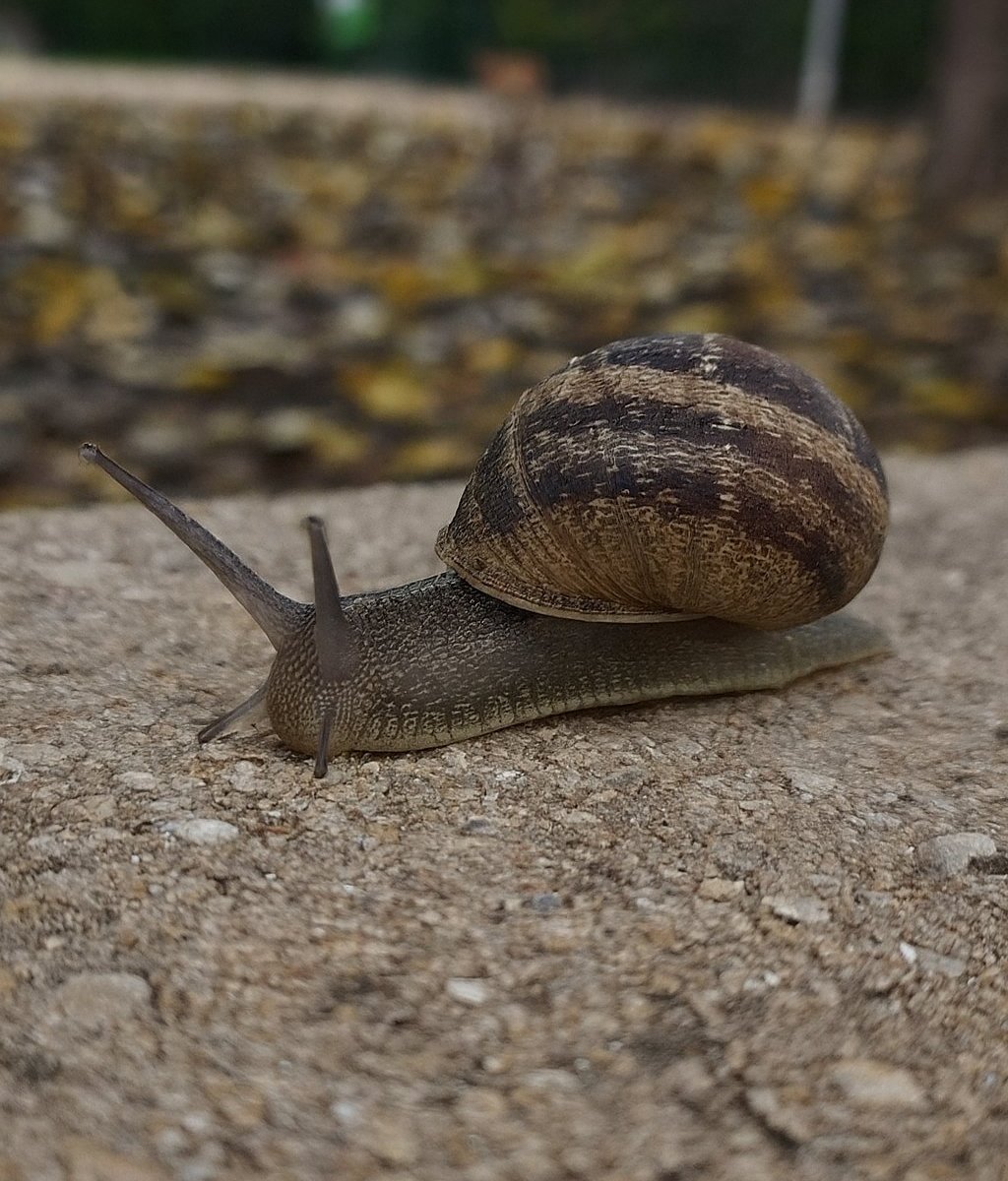
Garden snail moving slowly across stone, a quiet reminder of patience and gentle care

I keep a garden snail
not in a box
not in a jar
but in an agreement.

The agreement is simple.
I do not rush.
He does not explain.

Each morning I leave
a damp leaf
as if it were a letter
saying I remembered you.

He answers
by remaining alive.

The snail requires very little:
shade that means it,
water that arrives quietly,
and a world that does not suddenly decide
to be important.

When I forget myself
and think speed is truth,
he retracts.
When I calm down,
he resumes the future.

He has no ambition
beyond crossing a stone
by Tuesday
and surviving the birds’ opinions.

And yet
if I can keep this creature content—
with no plans,
no praise,
no comprehension of my efforts—
then perhaps living is not mastery.

Perhaps it is maintenance.

If I can keep a snail happy,
fed,
unpanicked,
unharmed by my cleverness,
then I can live anything.

Even me.


The story behind this story.

Thanks to my very great friend Alicia, my reading and writing life has been enriched with her curiosity and her vast knowledge of the book world. From authors long forgotten to those still weaving every story from mystery to culture to comedy to the most unusual authors I would never have considered without her most welcome interference.

Imagine my surprise when she sent me a photo of a snail and said “Meet my new pet”. So out of character, but then my knowledge of Alicia tells me there is something deep and profound in this peculiar statement, I just need to find it.

The result is the above poem which, as you have probably gathered, isn’t really about a snail. The snail is simply a quiet way into something more human.

At its heart, the poem explores what it feels like to care for something that cannot be hurried, impressed, or persuaded. A garden snail doesn’t respond to effort or intention in the way people do. It doesn’t reward anxiety or ambition. It simply reacts to calm, consistency, and gentleness. That makes the relationship oddly honest.

Many of us live with a constant sense of pressure — to do more, be quicker, justify ourselves, explain our choices, and keep up with an ever-moving world. The snail exists outside all of that. It has no interest in explanations or outcomes. When the poem says, “I do not rush. He does not explain,” it captures a rare peace: a space where nothing needs defending or proving.

The small daily acts in the poem — leaving a damp leaf, choosing shade, moving quietly — reflect a form of care that modern life often overlooks. This isn’t dramatic or self-sacrificing love. It’s ordinary attention. And that ordinariness is what makes it powerful. The snail’s only response is that it continues to live. Somehow, that feels like enough.

The poem also gently reverses the usual idea of control. When the person becomes stressed or hurried, the snail retreats. When calm returns, so does the snail. In this way, the animal mirrors something very familiar: how our own inner world tightens under pressure and opens when treated kindly.

The final lines offer the poem’s quiet insight. If we can keep something small, slow, and vulnerable safe and content — without needing recognition or success — then living isn’t about achievement at all. It’s about learning not to harm what is fragile, including ourselves.

I hope people like this poem not because it is clever, but because it feels like permission. Permission to slow down. Permission to care without justification. Permission to believe that gentleness, consistency, and patience are not weaknesses, but ways of staying alive.

In that sense, the snail becomes a reminder: living well doesn’t always mean doing more. Sometimes it simply means being careful enough to let life continue.

Living Off the Grid: The Journey of ‘Lucky the Lacky’

I met him because someone thought I ought to. That was the reason given, anyway. I was visiting Yosemite about twenty years ago, staying long enough to fall into conversation with a park employee who, after a day or two of small talk, said, almost casually, “You should meet a friend of mine.” He paused, gauging whether I was the sort of person who might laugh. “He lives off the grid. Completely.”

We drove for a while after leaving the park boundary. That mattered, I was told. Inside Yosemite, the rules were absolute, and rightly so. Preservation there was not a slogan but a discipline. You could admire nature, walk through it, photograph it, but you could not negotiate with it. My host’s friend had no quarrel with that. He simply knew the difference between stewardship and suffocation.

His land lay on the side of a mountain, far enough from the road that the last stretch was done slowly, deliberately, as if the place resisted being arrived at too quickly. He was a hunter, a fisherman, a farmer, but not in the romanticised way of catalogues and television. He knew where bears crossed and gave them room. He knew which rocks warmed snakes in the afternoon and left them alone. The wild boar were another matter—hybrids, aggressive, clever—and he spoke of them with the wary respect you reserve for something that can beat you if it chooses. Wolves, he said, were fewer every year. Farmers still poisoned and trapped them, not out of cruelty so much as habit. That observation came without anger, only with the calm note-taking of a man who preferred facts to outrage.

He kept a horse and goats, grazing them on land that had been measured and remeasured, not by surveyors this time but by weather, yield, and patience. Everything he needed was there, and almost nothing he didn’t.

His name was Patrick Murphy, though no one called him that. He had been christened “Lucky the Lacky” on an oil rig in his youth, a name that had clung because it was earned. Fresh out of college, qualifications in hand, his father had sent him offshore with a blunt instruction: to become an engineer, he had to start where engineering was least glamorous. That meant a year living and working with men who took pride in muscle, routine, and relentless teasing. They called him Lacky at first, and the name was not kind. He carried tools, cleaned messes, learned the rhythms of machinery and people. The teasing persisted, but so did the respect. Friendship grew where condescension was expected.

The day the name changed, a pressure system failed. A safety valve did its job too well. Shrapnel tore through the air, punched through a hut, and vanished into the sea beyond. Patrick had just sat down inside. Had he still been standing, he would not have walked away. The men who saw it happen decided that Lacky no longer fit. From then on he was Lucky, though “Lucky the Lacky” remained his formal title whenever ceremony demanded it.

He went on to live what most people would call a successful life. Marriage, children, good money, a future inheritance. Then came the divorce. It did not ruin him, but it rearranged him. He began to notice how much of his life was spent maintaining things he did not particularly want, under rules that assumed he could not be trusted to manage himself. The problem, as he saw it, was not rules in themselves. He had lived with them on rigs and respected them there. The problem was excess—regulation without purpose, oversight without understanding.

So he bought a mountain.

By forty, he had stripped his life back to what he considered essential. He obeyed the laws that mattered—licenses, taxes, insurance—and did so meticulously. A former engineer with an almost pathological respect for tolerances, he designed everything to exceed requirements. If an inspector came, they left reassured, if slightly puzzled. Beyond that, he kept authority at arm’s length.

Power came first from the sun. Solar panels fed an array of ten forty-eight-volt lead-acid batteries, the best available at the time. That power pumped water into a tower-mounted tank, gravity doing the rest. When he opened a tap, the descending water turned a small generator, reclaiming a fraction of the energy used to lift it. “It’s not much,” he said, almost apologetically, “but it offends me to waste effort.”

A river ran through his property. On it he built a water wheel, properly licensed, inspected, and documented. It produced about thirty amps at one hundred and fifteen volts, day and night. That, he said, was the only part of his life that required anyone else’s permission, and he accepted that without complaint. Left unregulated, rivers were abused. Some rules, he believed, existed because people had earned them.

He was not, despite appearances, cut off. He had internet access. He wrote, studied, made videos. An address existed where parcels could find him. He used these connections sparingly, but effectively. People sent him tools and gadgets to review. He obliged, not as an influencer but as an engineer who enjoyed explaining why something worked—or didn’t.

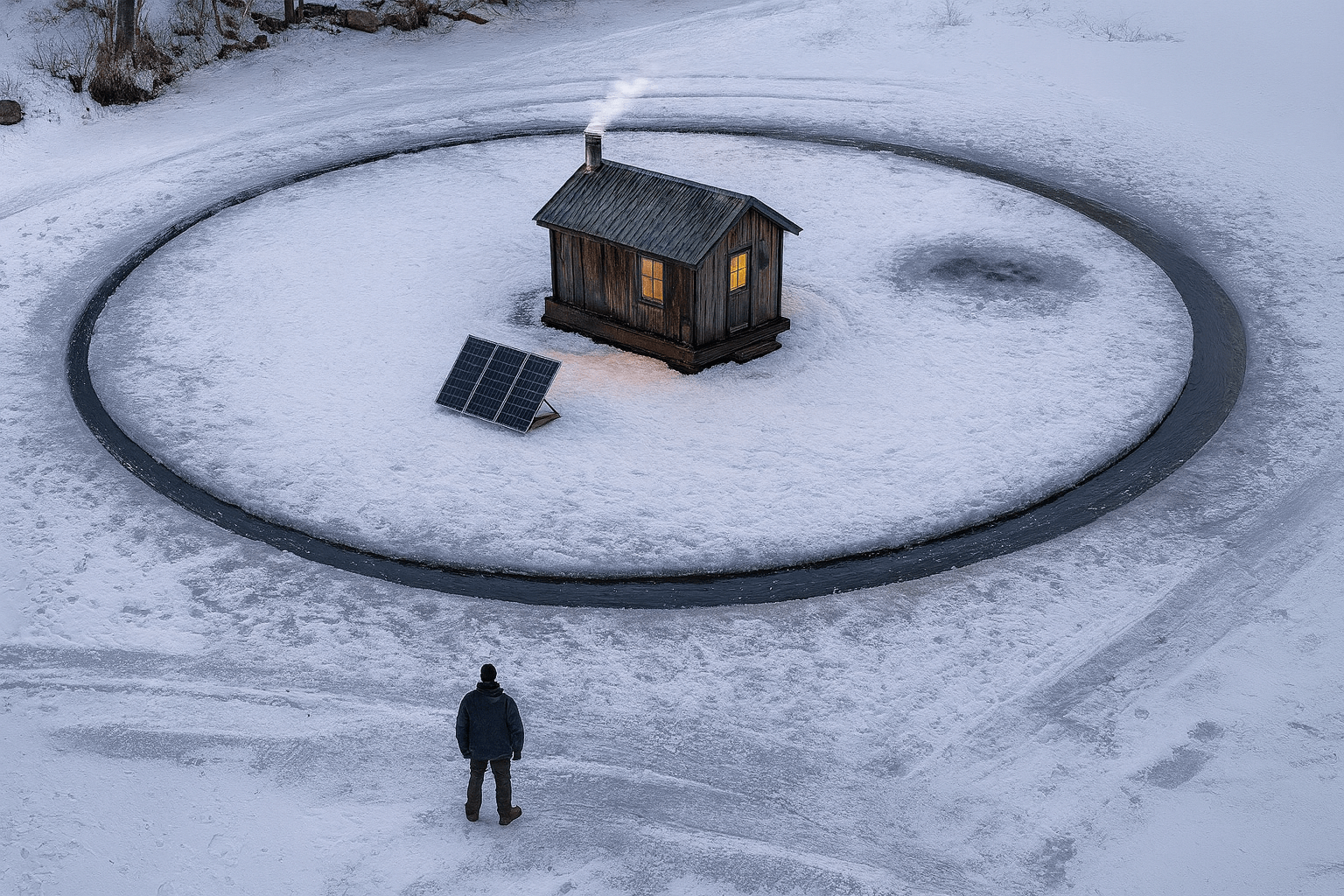
I visited him in winter, the year after he finished building his reservoir. It was fully permitted, fully documented, and entirely his own work. We walked down to it together. The lake had frozen nearly a foot thick. Near the centre, he had created an island.

He explained it with the quiet pride of someone who knew the explanation would land eventually. He had anchored a rope at the centre, drawn a perfect circle, and cut it by hand with a massive steel saw. Sixty feet across. In the middle sat an ice-fishing hut he had built himself. Double-glazed windows. A lamp. An electric cooker. Power came through a cable beneath the ice, fitted with a mechanism that allowed endless rotation without twisting. The island turned slowly during the day, driven by a small solar motor at its edge.

“Of course,” he said, watching it move, “it doesn’t run at night, or when the weather’s foul. But who wants to be out here then?”

Standing there, in the cold, watching an island turn because someone had thought carefully enough and been left alone long enough to make it happen, I felt something unexpected. Not awe at nature—I had plenty of that—but recognition. A sense that civilisation was not concrete and paperwork, not forms and permissions, but competence applied with restraint. Rules that protect, not smother. Freedom that assumes responsibility, not its absence.

When I left his mountain, I drove back towards towns and signs and instructions. I remember thinking, quite seriously, that I had just visited civilisation for the first time.

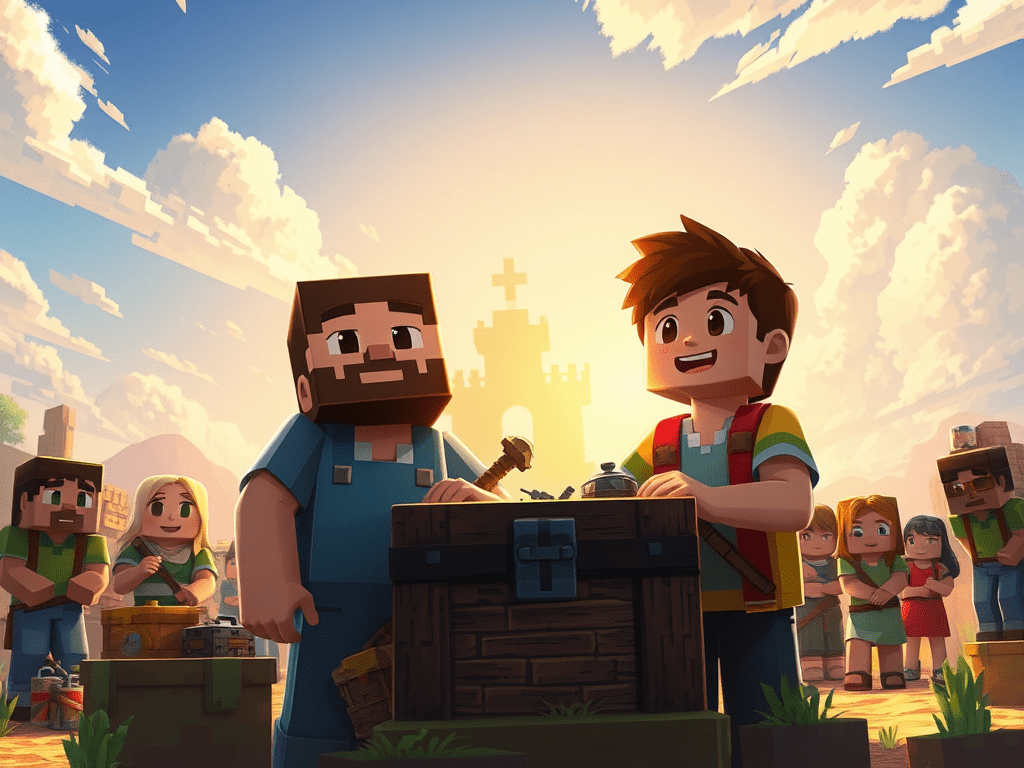
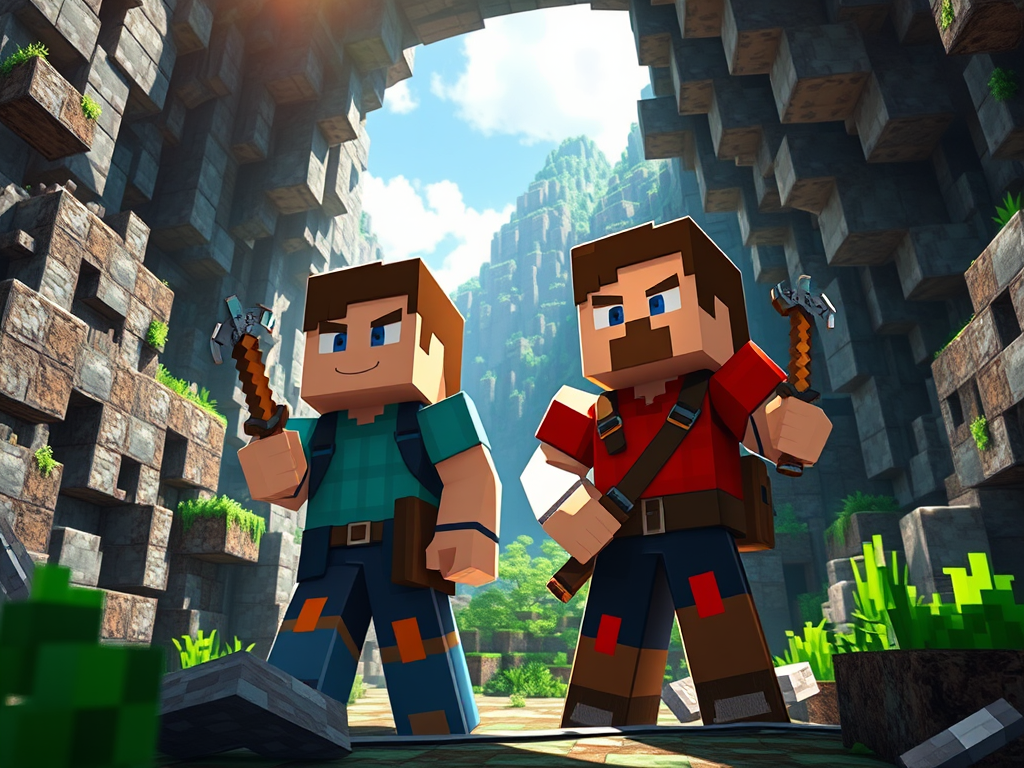
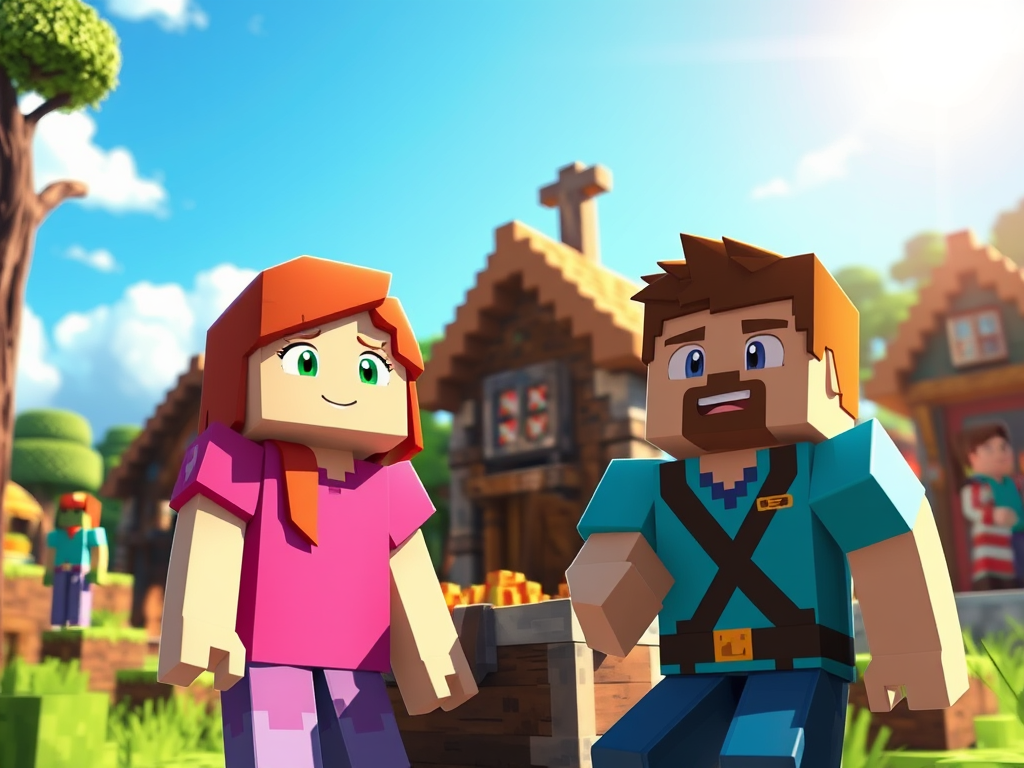
Steve and Alex – Builders of the World

A Minecraft Story for 6-8 year olds


The Ender Dragon’s Secret

The End portal was already awake.

“That shouldn’t happen,” Alex said.

They stepped through.

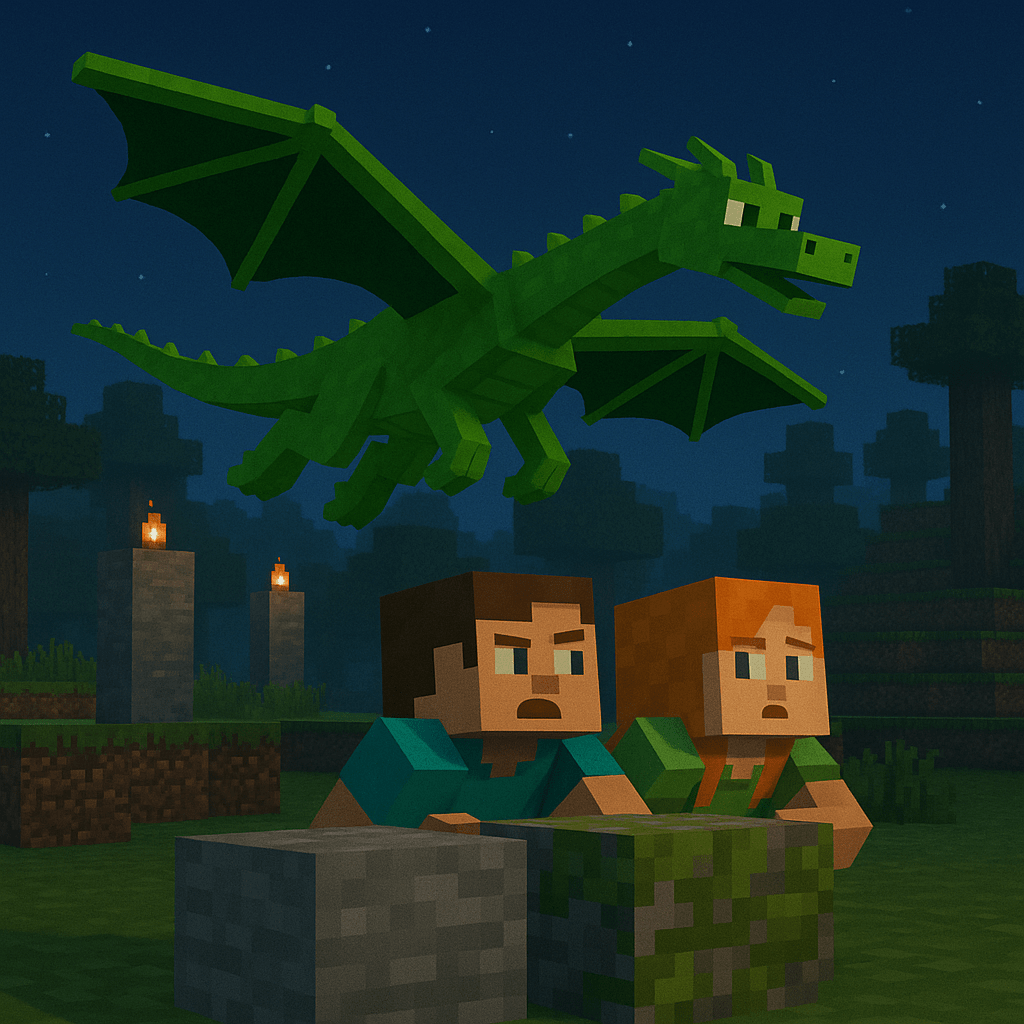
The End was quiet. The dragon circled high above, not attacking. Watching.

At the centre of the island, beneath cracked End Stone, they found an ancient lock — a stabiliser holding the world together.

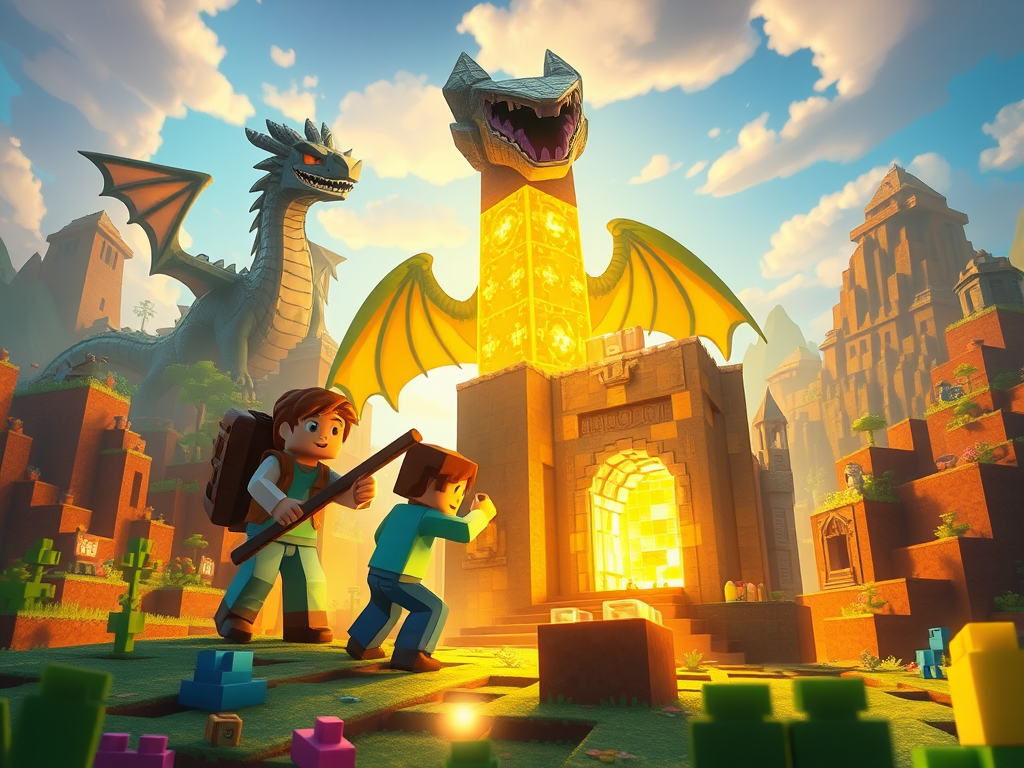
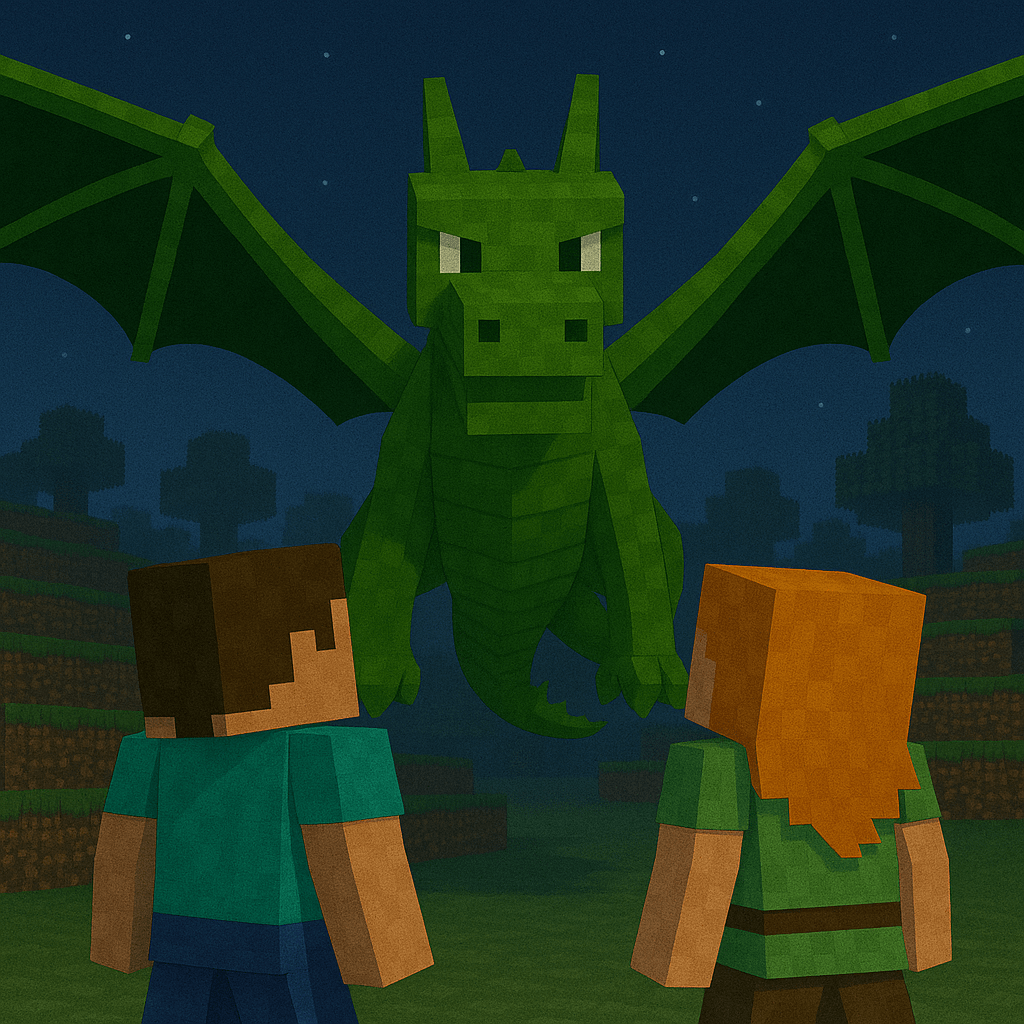
The dragon landed between them and the structure. Not as an enemy. As a guardian.

The dragon blocks Alex and Steve's way

Steve put his sword away. Alex did the same.

They spoke the words together, gently.

“Block by block.
Stone and wood.
Build it straight.
Build it good.”

The structure opened. They repaired it.

The cracks sealed. The End steadied.

The dragon bowed.

Some things, Steve realised, don’t need defeating.


Chris’s Story — The Frozen Builders

The village in the snow wasn’t broken.

It was paused.

Ice covered doors and wells, but nothing was damaged. Beneath the village, Steve and Alex found a cooling engine that had done its job too well.

“We don’t need to smash it,” Alex whispered.

Image of the village covered in ice

They worked gently, one block at a time.

“Block by block.”
“Stone and wood.”
“Build it straight.”
“Build it good.”

The ice softened. The village woke quietly.

Steve thought of Chris — patient, careful, knowing when to stop.

Snow fell softly, just as it should.


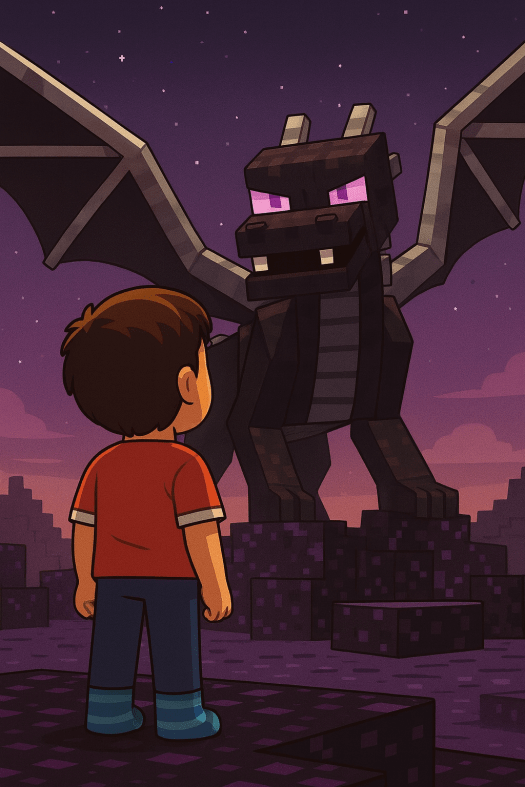
Chris stands in front of the dragon

Jonathan’s Story — The Jungle That Builds Back

The jungle copied everything.

Towers. Bridges. Clever tricks.

Each time Steve and Alex built, the temple rebuilt it stronger.

“It’s learning,” Alex said.

They stopped trying to be clever.

One block. Then another.

“Block by block.”
“Stone and wood.”
“Build it straight.”
“Build it good.”

The jungle slowed. The path opened.

Steve smiled. Jonathan would have understood — think ahead, build wisely.


Epilogue — By the Campfire

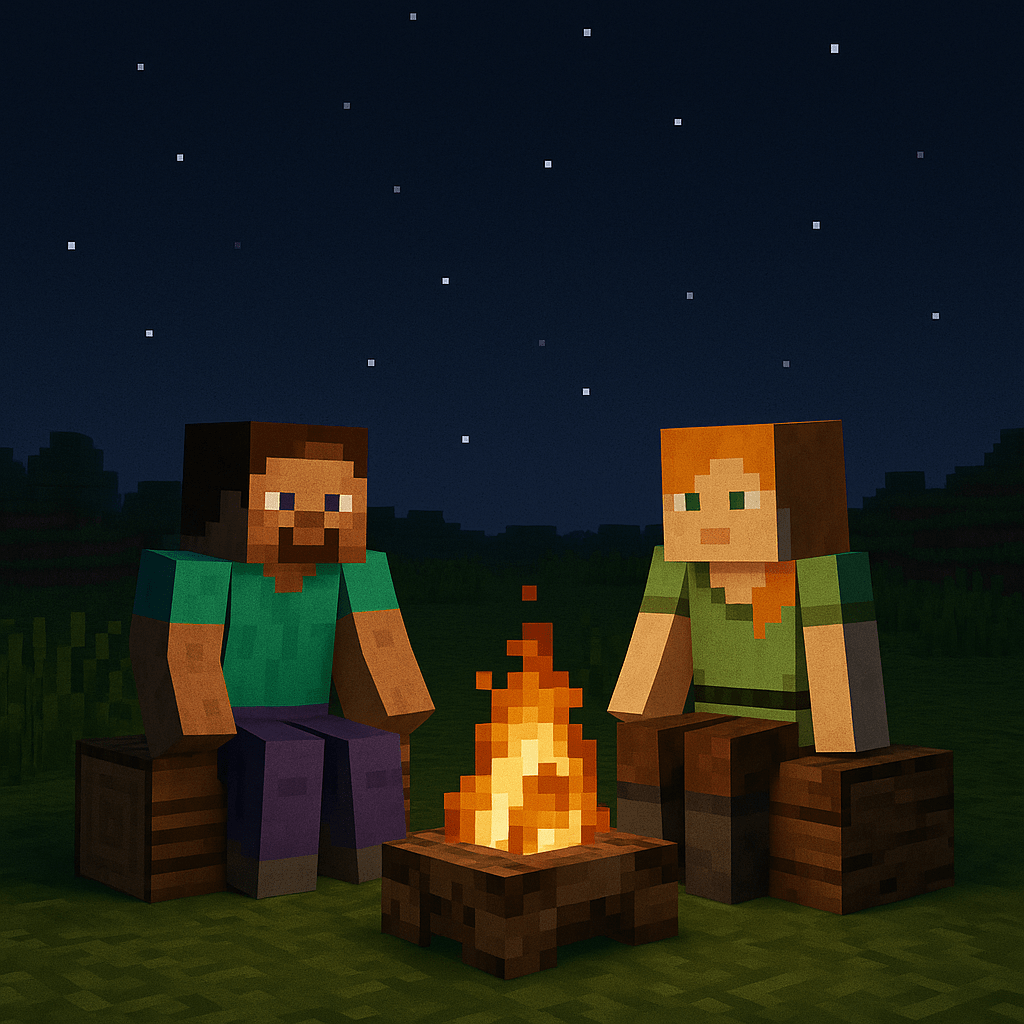
That night, Steve and Alex sat by a campfire.

A map lay between them.
One mark in snow.
One in jungle green.

“The problems were different,” Alex said.

“But the answer wasn’t,” Steve replied.

They said the words one last time, quietly now — not a chant, just something true.

“Block by block.
Stone and wood.
Build it straight.
Build it good.”

The fire crackled.
The world rested.
And two builders slept, ready for tomorrow.

The Village That Forgot How to Build

A Minecraft Story for 6-8 year olds

Steve noticed something was wrong the moment his pickaxe snapped.

It wasn’t old. It wasn’t damaged. It had barely touched the stone before it broke clean in two.

Alex stopped and looked at her shovel. “That makes three tools today.”

They stood in a village they both knew well. The houses were still standing, the paths still tidy, but the villagers were restless. One hurried past carrying a door that was clearly too small for its doorway.

“Hrrm,” the villager muttered, turning it sideways. It still didn’t fit.

At the crafting table, Steve laid out four wooden planks. Perfectly placed.

Nothing happened.

Alex tried next. Still nothing.

The villagers gathered, whispering. One showed them a chest that wouldn’t open. Another held a hoe that bent when it touched the soil.

“We haven’t forgotten how to build,” said the village elder. “The world has forgotten how to fit.”

That night, Alex lit a torch and held it steady. The flame flickered strangely.

Steve took a breath. “If the world’s rules are loose,” he said, “then something underground is pulling them apart.”

Alex nodded. “The old mine.”

Before they set off, Steve placed one last block by the path. He spoke quietly, more to himself than anyone else.

“Block by block,
Stone and wood,
Build it straight,
Build it good.”

Alex smiled — and repeated it.

The mine lay beyond the hills, dark and silent. Inside, the rails twisted oddly, and Redstone dust hummed like it was thinking too hard.

Deep underground, they found the cause.

An ancient Redstone engine, once built to help shape the world, was still running — but badly. Circuits crossed where they shouldn’t. Power flowed the wrong way. Blocks shuddered slightly, as if unsure where they belonged.

“It’s not broken,” Alex said. “It’s confused.”

They set to work.

Steve realigned the circuits, one by one. Alex replaced cracked blocks and reset the levers. As they worked, they spoke the words together, each line matching their hands.

“Block by block,” Steve said, tightening a circuit.
“Stone and wood,” Alex replied, fitting a block into place.
“Build it straight,” they said together, stepping back.
“Build it good.”

The engine slowed.

Then it stopped.

The mine went quiet.

When they returned to the village, the sun rose exactly where it should.

A villager placed wood on the crafting table.

Thunk.

A perfect chest appeared.

Doors fit. Tools held. Crops grew straight and tall. The village felt solid again, as if the world had taken a deep breath.

The elder raised his hands. Slowly, the villagers began to speak — not loudly, not proudly, but carefully.

“Block by block,” one said.
“Stone and wood,” said another.
“Build it straight,” said a child.
“Build it good,” they finished together.

Steve lifted his pickaxe. Strong. Reliable.

Alex grinned. “Good thing,” she said. “Because builders are still needed.”

And deep underground, the Redstone slept — exactly as it should.

Celebrating Hump Day: Poems for Wednesday Motivation

Midweek’s here, they call it hump—
A Wednesday pause, a middle bump.
We glance behind at days now done,
Yet weekend’s not yet quite begun.

It’s that awkward sort of middle ground,
Too far from either end we’ve found.
Not quite enough to call it a win,
Not enough time to really begin.

But here we are on Wednesday’s hill,
Halfway up and onward still.
A little poem to mark the day,
As we push through the week’s halfway.

Wednesday—the day caught between what hasn’t happened and what won’t.